We use cookies and similar technologies to improve user experience, and analyse activities and performance. For more information, please see our Privacy Policy. 


Recipe Detail Page
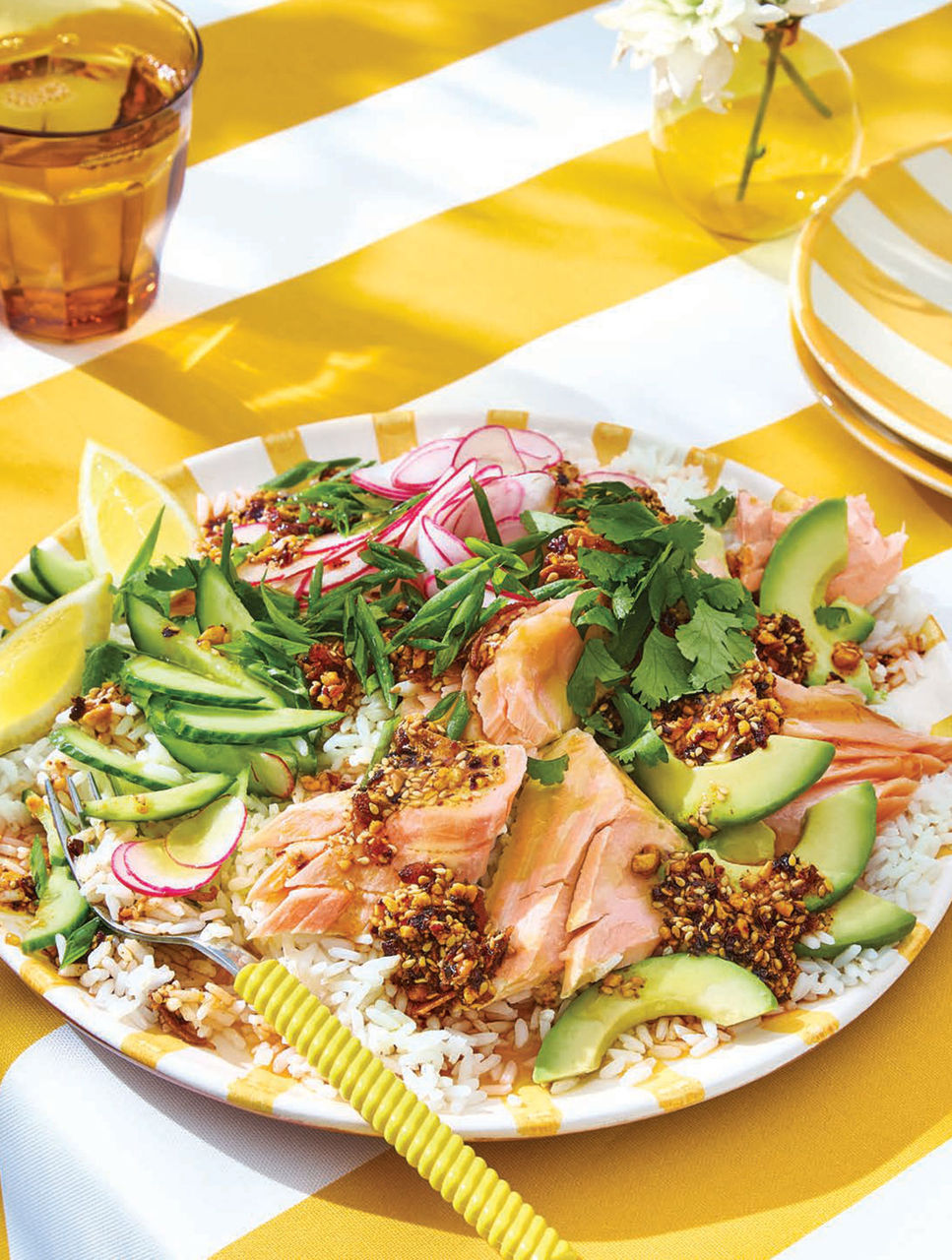

Citrus-Poached Salmon Bowls
Summer 2026
Gentle poaching in a citrusy broth keeps salmon silky and tender, even after chilling, making it ideal for summer. Served over rice and finished with crunchy vegetables and a vibrant salsa macha, this dish delivers bold flavours on a hot evening.
Serves 4
Finely grated zest and juice of 1 orange
Finely grated zest and juice of 1 lemon
1 cup (250 mL) dry white wine
2 cloves garlic, smashed
6 sprigs cilantro
1 1/4 lbs (565 g) skinless salmon fillet, cut into four equal portions
1 tsp (5 mL) Diamond Crystal kosher salt or 1/2 tsp (2 mL) table salt, plus more to taste
4 cups (1 L) cooked long-grain white rice (from 1 1/3 cups/330 mL raw), cooled to room temperature
Extra virgin olive oil for drizzling
2 mini cucumbers, halved, thinly sliced on bias
1 large ripe avocado, halved, pitted, thinly sliced
4 radishes, sliced into paper-thin rounds
1/2 cup (125 mL) packed cilantro leaves, roughly chopped
2 tbsp (30 mL) thinly sliced green onions or chives
Salsa Macha (recipe follows)
Lemon wedges to serve (optional)
1. Add zest and juice from orange and lemon, wine, garlic, cilantro and 1/2 cup (125 mL) water to a sauté pan with a lid. Bring to a simmer, uncovered, over medium heat.
2. Meanwhile, pat salmon dry with paper towel and season with salt. When poaching liquid is simmering gently, place salmon in pan and reduce heat to low. (Liquid should come about halfway up fish. If not, add more water.) Cover and poach until salmon is cooked through, 6 to 8 minutes. Carefully transfer salmon to a plate and cool completely. Transfer to an airtight container and then refrigerate until chilled or set aside to keep at room temperature while preparing platter. Salmon can be kept in the fridge for 2 to 3 days, but it’s best eaten fresh.
3. To serve, spread rice on a serving platter or in four shallow bowls. Drizzle with olive oil and season with salt. Scatter cucumber, avocado and radishes evenly overtop. Top with salmon, either in whole pieces or broken into large, rustic chunks. Sprinkle with cilantro and green onion or chives. Drizzle everything with some salsa macha, and serve immediately with lemon wedges and more salsa macha on side.
Serves 4
SALSA MACHA
Originally from Veracruz, Mexico, salsa macha is a spicy, crunchy, oil-based sauce that’s delicious on just about everything from poached fish to avocado toast. This version adds a few unconventional elements, including crispy shallots, orange zest and two dried chilies: smoky ancho and fiery chilies de árbol. Find both at Latin grocery stores or online, or substitute any small dried hot chiles (or chili flakes). Make it ahead; the flavours improve as it sits.
2 ancho chilies, stemmed, torn into small pieces
4 chilies de árbol
1/3 cup (80 mL) roasted peanuts
1/2 cup (125 mL) canola oil, plus more as needed
2 medium shallots, halved, thinly sliced into half moons
4 garlic cloves, thinly sliced
1/4 cup (60 mL) toasted sesame seeds
2 tsp (10 mL) dark brown sugar
1 tsp (5 mL) smoked paprika
1 tsp (5 mL) oregano
Salt to taste
1 tsp (5 mL) white vinegar
1/2 tsp (2 mL) finely grated orange zest
1. In a food processor, pulse chilies until very finely chopped. Add peanuts and pulse just until roughly ground. Set aside.
2. Heat canola oil in a small saucepan over medium-low heat. Add shallots and garlic and cook gently, stirring often, until golden brown and lightly crisp, about 5 to 8 minutes. Transfer with a slotted spoon to a bowl. Set aside.
3. Reduce heat under oil to low and carefully add chili-peanut mixture along with sesame seeds, brown sugar, smoked paprika, oregano and salt. Cook, stirring, until fragrant, 1 to 2 minutes. Remove from heat and stir in vinegar, orange zest and reserved shallots and garlic. If it’s a bit thick, add a little more oil to loosen it.
4. Cool completely then transfer to a glass jar. Cover with lid and refrigerate up to 2 weeks. Bring to room temperature and stir before using.
Makes 1 cup (250 mL)
